Nature’s cruelty and indifference
The Man Who LaughsNature’s cruelty and indifference is a recurring idea expressed through the novel’s storms, sea, snow, and fog: natural forces act on their own terms, without regard for human intention or innocence. The Matutina’s peril and a child’s passage through a winter landscape make that indifference concrete, while the narration gives the elements a force and scale that exceed human control. Nature is not merely a backdrop to suffering; it helps determine what can happen and who must bear the consequences.
Nature as an independent force
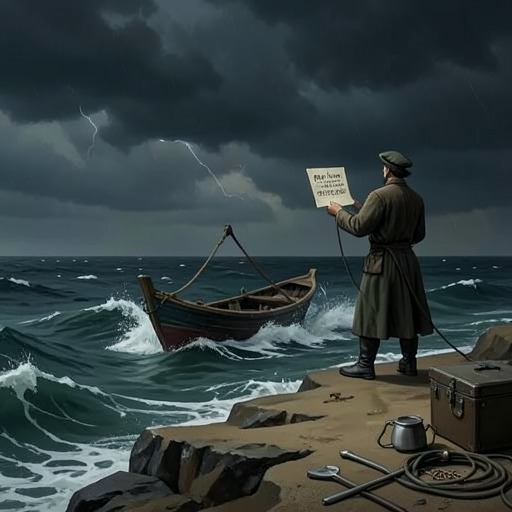
The storm is presented not as a changeable setting that simply reflects human emotion, but as an immense force with its own motion. A great wave strikes the Matutina’s quarter, and the narration describes how such a wave can rise and break upon a distressed vessel. The image makes the ship’s vulnerability physical and immediate: the people aboard are exposed to a force that does not negotiate with their purposes. Their danger does not result from a moral judgment by nature; it follows from the encounter between a vessel and an environment powerful enough to overwhelm it.
The hurricane expands this scene into a more general vision of the nonhuman world. It is imagined as the cry of an immense, obscure universe, a sound that exceeds ordinary speech without becoming intelligible language. This framing makes the storm difficult to interpret as either purposeful punishment or benevolent design. Nature has an overwhelming presence, but no clear message for human beings to decipher. Its power can be felt; its intentions, if it has any, remain inaccessible.
The sea and the limits of human agency
The narration defines shipwreck through a series of contradictions: people may be near land yet unable to reach it, afloat yet unable to choose their direction, and surrounded by open space yet trapped between sky and water. The sea thus turns apparent freedom of movement into confinement. Human beings depend on air and water, but cannot command either; what sustains life can also become the condition of helplessness. The scene’s force comes not just from physical danger but from the collapse of ordinary control over movement and refuge.
The ocean’s behavior further resists a simple pattern of attack and reprieve. At times it drives a wreck toward disaster; at others, its changing force seems to delay or prolong the danger. Its soft intervals do not guarantee safety, just as a violent onset does not explain what will follow. The narration therefore treats the sea’s apparent alternation between severity and calm as another form of uncertainty, rather than evidence that nature has relented. The Matutina is dragged back out to sea by the remains of its rigging after the south-westerly wind rises. That reversal makes the wreck’s movement part of the peril: even the forces that might seem to carry the vessel onward do not provide a dependable route to safety.
Exposure on land
The child’s experience on land extends the same idea beyond the maritime disaster. The storm is described as no less severe on shore, where its forces surround an abandoned child. Hail, snow, and mist differ in how they threaten, but none offers protection because of its gentleness or purity. Snow accumulates gradually and silently; fog gives way before the traveller while still obscuring danger. The contrast is between appearance and consequence: a force can seem mild at each encounter and remain hazardous in its persistence.
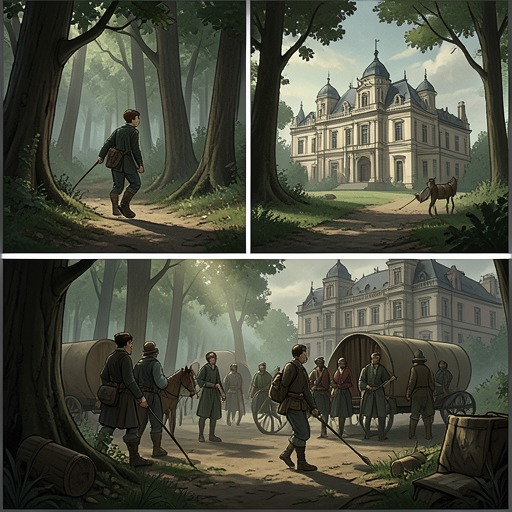
After reaching the bottom of the descent, the child comes to Chesil without understanding the geography of the route. The child is moving along an isthmus with the ocean on both sides, between deep water on one side and the raging sea on the other. Fog, snow, and darkness compound the risk by making it difficult to recognize the narrowness of the path. The scene places a vulnerable human being between hazards that do not distinguish innocence from guilt. The child’s progress is real, but it is not a sign that the landscape has become safe or that the elements have chosen to spare him.
Indifference, justice, and the human frame
The novel also uses a dead man’s exposed, unburied presence to prompt reflection on the relation between natural facts and moral meaning. The body is described as a sign and testimony: human authority has placed it there, while the narration imagines it as awaiting a justice beyond the law of earth. The disturbance this produces belongs partly to human thought. The dead man’s condition invites speculation about vengeance and divine judgment, but the passage does not turn the surrounding world into a clear instrument of either. It instead holds open the gap between what humans have done and what, if anything, a higher order will answer.
Across these scenes, nature’s indifference is not simply the absence of beauty or the presence of violence. It is the mismatch between human needs and forces that proceed without accommodating them. The sea can confine those who depend on it, and weather can threaten a child as readily as it shapes the landscape. By moving between dramatic shipwreck, gradual exposure, and meditation on an unburied body, the narrative makes human vulnerability visible while resisting easy assurances that suffering is purposeful, deserved, or corrected by the natural world.